
Kudos
Recognise genuine, verified effort and progress—not only polished final outcomes.
He Ara Angitū combines a universal core for secondary students with stronger targeted support where barriers are higher. Every mechanism remains a hypothesis until independent evaluation says otherwise.
The programme is meant to strengthen the chain between what a student does today and the choices available after school.
The universal core is a lower-intensity structure intended to reach secondary students broadly without labelling them as broken, risky or in need of rescue.
Stage 0 must decide eligibility, intensity, verification rules, school workload, fairness across different circumstances and how to avoid rewarding bureaucracy rather than development.
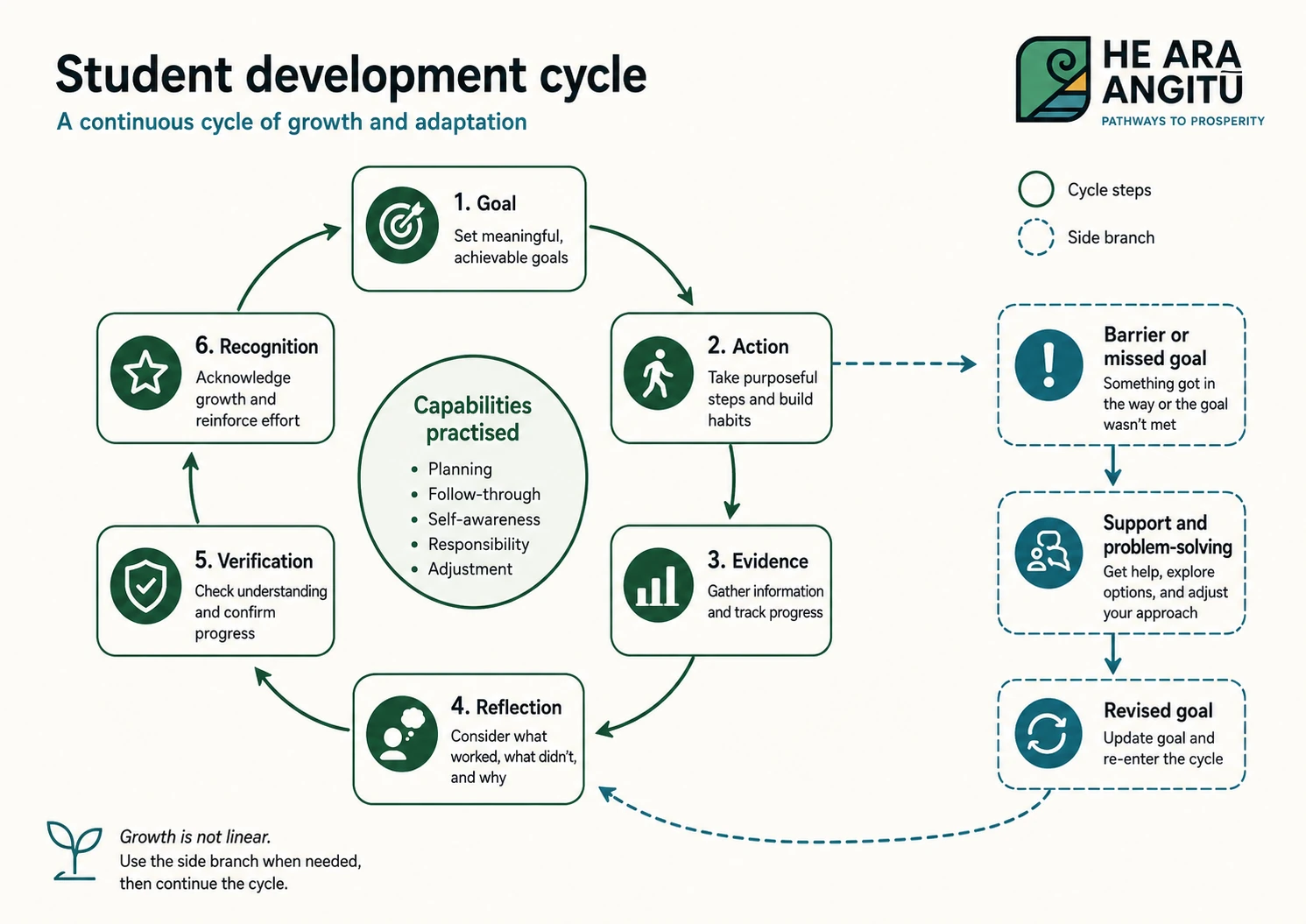
Each student chooses one small improvement, records evidence and reviews it weekly. Bonuses recognise honest participation in the cycle—not perfect behaviour or pleasing an adult.
See the complete practice and safeguardsThe phrase creates a manageable mindset. The economic model separately tests whether stronger capability could produce a 1%, 5% or 10% average real lifetime earnings gain across the cohort.
Universal does not mean identical. Some students face transport barriers, unstable housing, caring responsibilities, disability, financial pressure, weak access to opportunities or a much higher risk of sustained disconnection.
The targeted accelerator could add more intensive mentoring, practical barrier removal, navigation, whānau engagement and coordinated support. The criteria must be fair, contestable and designed to avoid stigma.
The pilot must test whether the parts reinforce one another—or whether we have merely assembled a very expensive collection of good intentions.
Recognise genuine, verified effort and progress—not only polished final outcomes.
Provide immediate help and protected Learning Capital linked to participation rules.
Give and receive support, building responsibility, confidence and connection.
Value learning and contribution across more than the examination timetable.
Open real pathways while protecting student choice and preventing industry capture.
A student agrees a realistic goal or contribution with appropriate support.
They complete learning, participation, mentoring, work, volunteering or another approved activity.
Evidence is checked proportionately. Flags trigger human review, not automatic guilt.
The student considers what worked, what did not and what to change.
Support is allocated and the next goal begins.
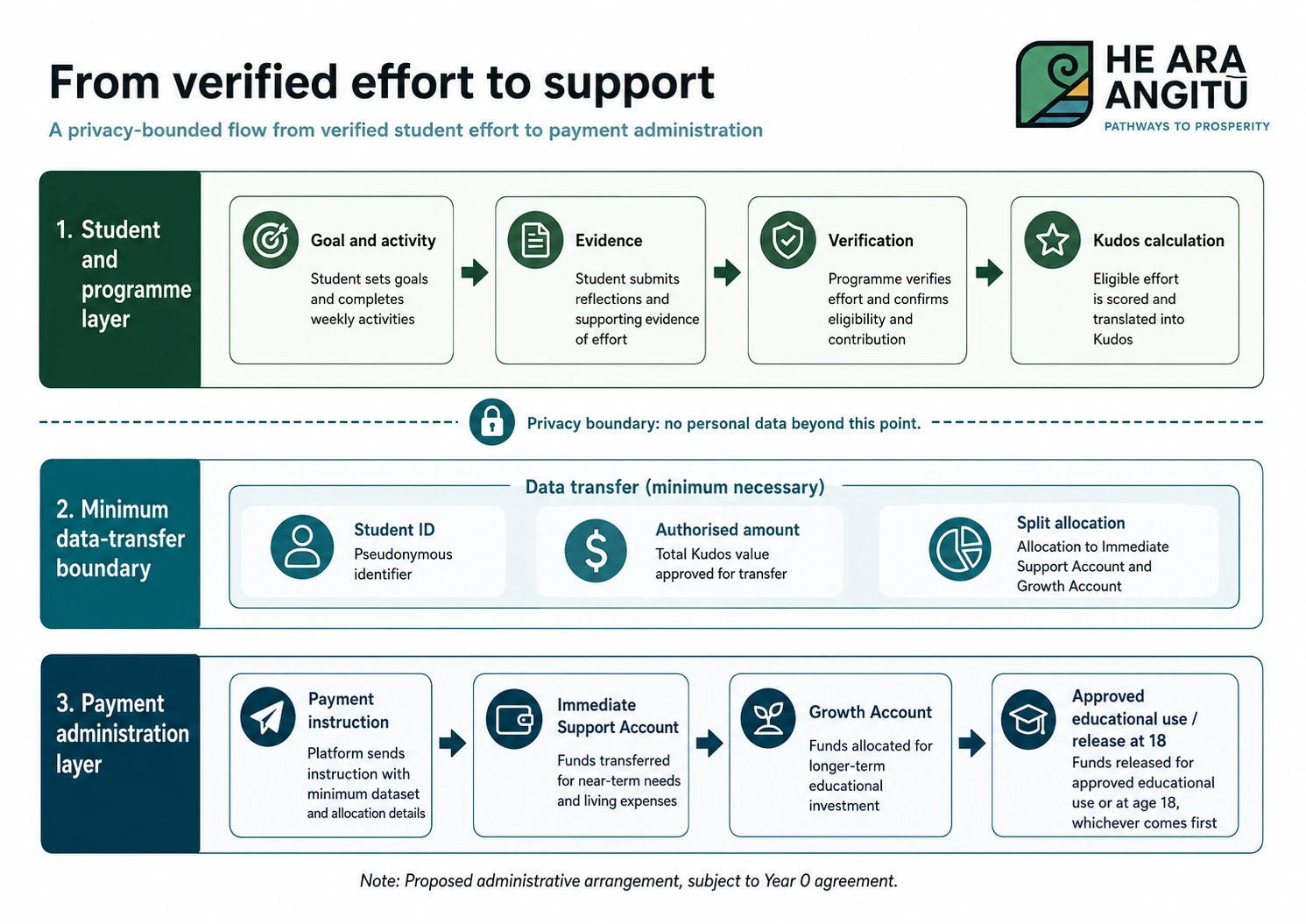
Under the current model, half of verified participation payments would be protected as Learning Capital. Approved uses would centre on tertiary study, vocational education and apprenticeships, with regulated governance and low-fee investment settings.
Returns are uncertain. Both payment portions remain programme expenditure. A projected account balance and student debt avoided must not be counted twice.
Open the Learning Capital design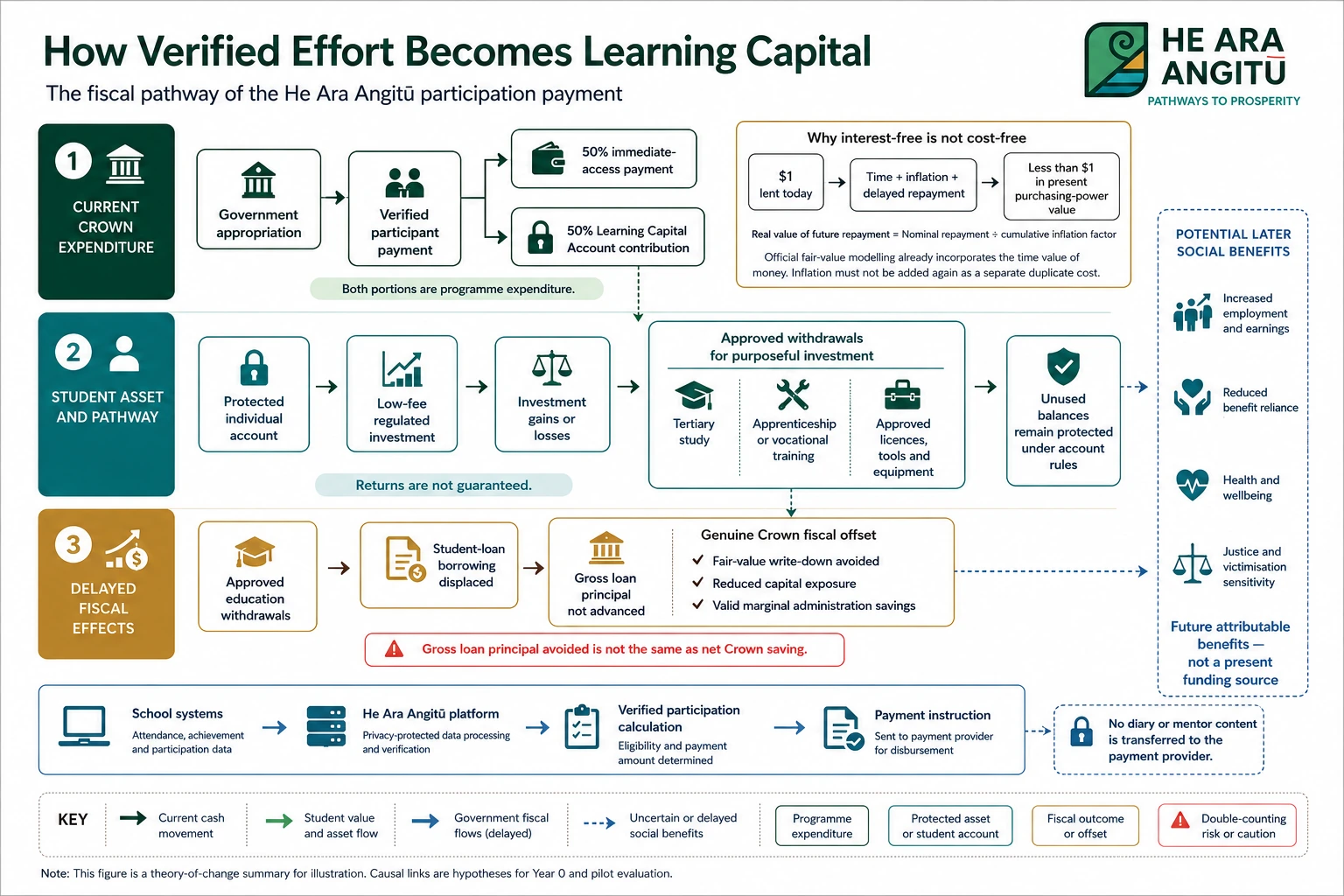
No exclusive recruitment rights, compulsory service or employer ownership of student accounts.
Independent labour-market forecasting, worker and union representation, and monitoring for oversupply or wage suppression.
Credentials stay transferable. Students retain pathway choice. Employers do not control curriculum or occupation quotas.
Stage 0 designs the rules and tests feasibility. A bounded pilot measures delivery and causal effects. National scale remains a separate decision.
See the stage gates