
Young people develop slowly
Capability, identity, qualifications and careers accumulate across years, not press cycles.
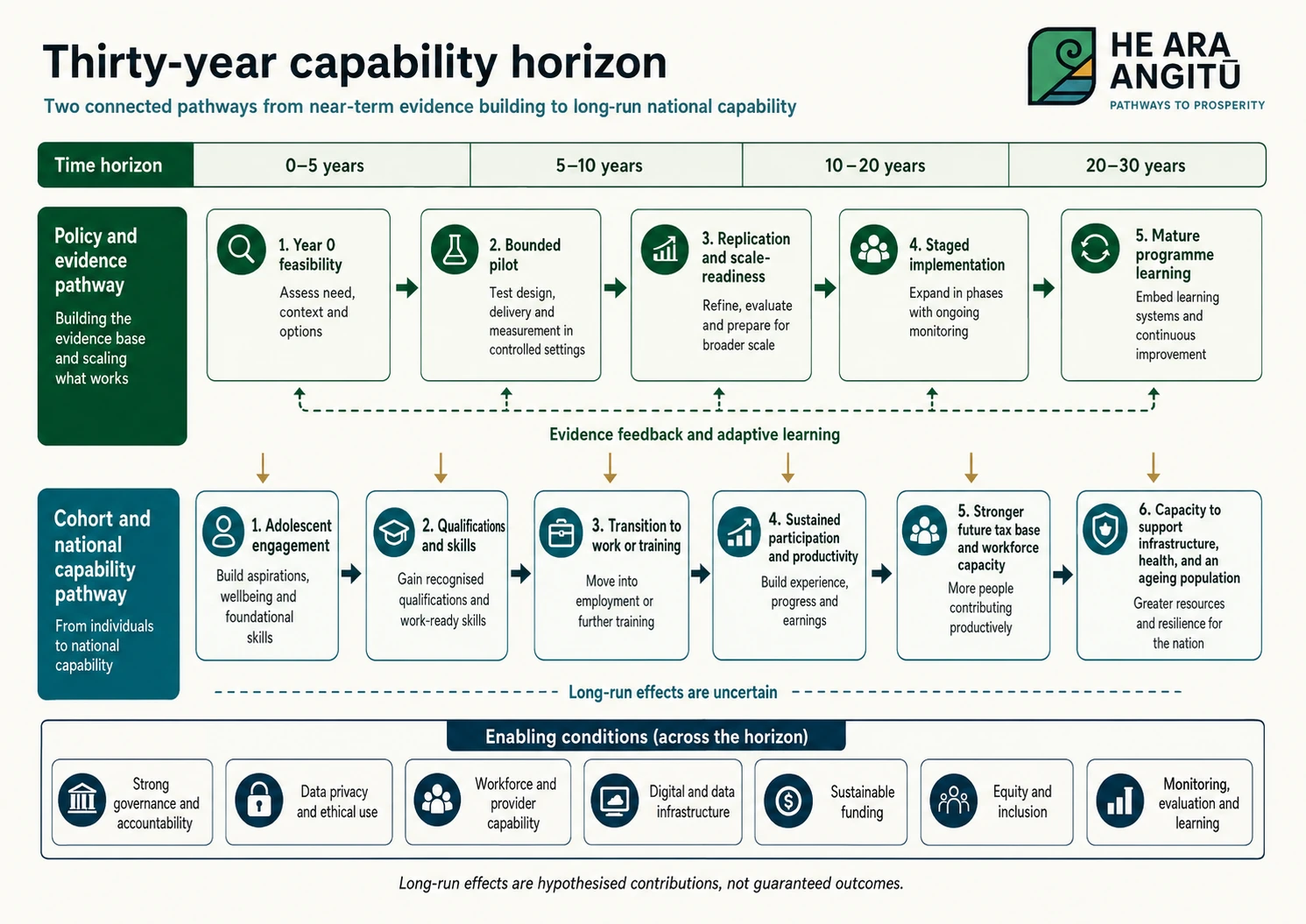
He Ara Angitū is not New Zealand’s complete 30-year plan. It is one practical proposal inside a larger demand: political decisions should be judged against the country young people will inherit.
Capability, identity, qualifications and careers accumulate across years, not press cycles.
Population ageing and workforce pressure do not wait for parties to finish blaming one another.
The political credit may arrive after the government that invested has left office—which is exactly why durable cross-party frameworks matter.
Parties should disagree about cost, design, institutions and priorities. They should not need to pretend the future begins again every three years.
He Ara Angitū does not claim to solve productivity, demographic ageing, the 2056 workforce or every cause of youth disengagement. It asks whether one structured form of secondary-school investment can improve capability and pathways enough to justify its cost.
If it works, it may become one useful part of a longer national capability strategy. If it does not, the country should learn quickly, publish the result and move on rather than embalming it in a budget line.
I want political parties competing over the best thirty-year plan—not who can make the other side look worst by Thursday.